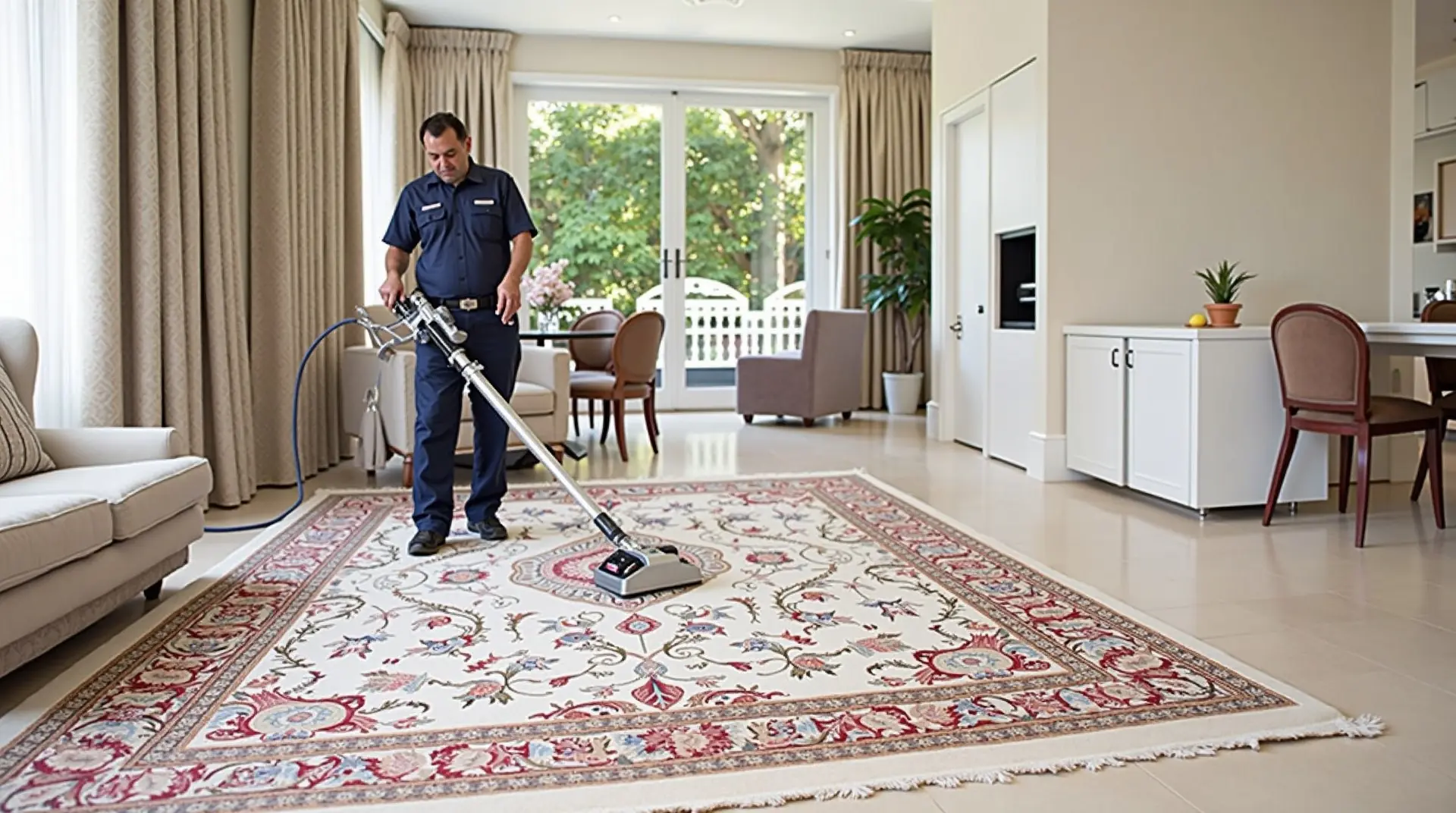
Give your rugs individual attention based on their fibre, dyes, backing and condition. We assess everyday soil, stains and odours before recommending a suitable cleaning approach.
Rugs in entrances, living rooms and beneath dining tables collect different kinds of soil. Grit can settle below the visible surface, while spills may affect fringes and backing as well as the pile.
Our Brisbane rug cleaning starts with a check of construction, colour stability and existing damage. We discuss the method and likely results before treating valuable, delicate or heavily soiled pieces.
Tell us the dimensions, material and care label, plus any stain history. Photos of the front, backing and fringes help us prepare a useful assessment and quote.
Your rug is assessed individually, with the proposed work and any limitations explained before treatment.
Fibre, dyes, fringes and backing are considered together when selecting a suitable method.
Confirm the handling arrangements and expected drying or return window when booking.
Rug cleaning needs to account for more than the visible pile. Dyes, adhesives, woven foundations and decorative fringes can respond differently to water and products. Inspection helps us choose a practical method and identify existing wear or damage that cleaning will not reverse.
Cleaning targets accumulated loose soil and residues in the treated areas. Ask about suitable methods if the rug has a history of pet accidents or previous spot treatments.
Colour testing and a check of construction help guide treatment. Existing fading, dye migration and damaged fibres may remain after cleaning.
From everyday synthetics to delicate woven pieces, the rug itself determines the approach. Please share the care label and any history of repairs, shrinkage or colour bleeding.
Wool rugs are assessed for dyes, construction and backing before treatment. Moisture, product choice and handling are adjusted to suit the piece.
Persian rugs vary in material, age and colour stability. We review the foundation, fringes and existing wear rather than choosing a method based only on the style name.
Silk and silk-blend rugs need careful identification and testing. We explain when specialist assessment or an alternative to routine wet cleaning is more appropriate.
Long pile can hold grit around the base of the fibres. Soil removal and controlled handling are planned with attention to tangling, backing and drying.
Synthetic rugs may tolerate different methods from natural fibres, but backing adhesives, stains and construction still need inspection before cleaning.
Handmade and mixed-material rugs are reviewed individually. Tell us about sentimental value, repairs and uncertain fibre information so we can discuss the risks and options.
A useful rug clean starts with clear expectations. We identify the soil and construction, discuss what may remain and agree the handling and treatment before work begins.
Equipment and products are selected after inspection. The aim is to remove accessible soil and residues while controlling the risks associated with the rug materials.
Dry soil removal and suitable cleaning can lift accumulated dust and debris. Complete allergen removal or changes to health symptoms are not promised.
Odour is assessed alongside stain history and the backing condition. Repeated pet accidents or affected underlying materials may need more than a standard clean.
Each rug follows an agreed plan, from initial checks through soil removal, spot treatment and drying. We confirm which stages suit the piece and explain any separate specialist work.
We check dimensions, fibre information, colour stability, fringes and visible damage before recommending treatment.
Loose soil is removed using an approach suited to the pile and construction, with care around delicate or weakened areas.
Individual marks are assessed for appropriate treatment. Tell us which household products have already been applied.
The main clean is selected for the rug, with moisture and recovery controlled to suit its construction and condition.
Products are selected for the material and task. Ask about particular sensitivities and follow the advice on keeping children and pets away during treatment and drying.
Colourfastness testing guides the approach, but it cannot reverse existing fading or damage. We explain uncertainties before proceeding.
Before the rug is returned to use, we review its condition and provide aftercare. Confirm drying and handling arrangements rather than assuming every rug will be ready the same day.
Construction Checked First
Spots Assessed Individually
Aftercare Explained
Professional attention can improve a rug’s presentation by removing accumulated soil and treating suitable marks. The result depends on the fibre, stain age and existing wear, so we discuss realistic expectations for your piece.
Appropriate soil removal reaches beyond a quick surface vacuum. Aged stains and permanent colour changes are assessed separately from removable dirt.
Removing abrasive grit is one part of rug maintenance. Follow the care label and rotate or reposition the rug where practical to manage uneven use.
A clean removes accumulated residues from treated areas. Routine ventilation and household maintenance remain separate parts of looking after the room.
Lifting dulling soil can make patterns and pile look clearer. Cleaning cannot restore colour lost through sun fading or wear.
We choose products for the material and explain use precautions. Please identify sensitivities or concerns about previous treatments before the visit.
Wool, silk, synthetic and mixed-material pieces need different checks. The rug construction and condition determine what is practical.
A maintained rug can make a room feel fresher and easier to care for. Keep up suitable vacuuming and respond to spills according to the care guidance.
We review the visible finish and discuss any remaining marks. Changes from wear, crushed pile or dye loss may remain even after cleaning.
Wine, pet accidents, ink and damp odours each need a different assessment. Share the cause and age of the problem so treatment can be selected for both the mark and the rug material.
Food and drink spills are assessed for suitable spot treatment. Blot fresh spills gently and avoid rubbing or adding untested household products.
Pet contamination may reach the backing or the surface beneath the rug. We discuss the affected layers and whether separate treatment or replacement is needed.
Ink and paint vary widely. Tell us the product and whether it has dried; testing may show that further treatment risks the dyes or fibres.
Oily marks need a product and application method suited to the rug. Prior treatments and the affected backing can influence the result.
Smoke and cooking residues may affect both the rug and the surrounding room. We assess the rug treatment without promising that cleaning one item will resolve the wider source.
Dampness and visible mould require a check of the material and the moisture source. Some rugs may need specialist assessment or replacement rather than routine cleaning.
Spot treatment is selected after inspection. Keep children and pets away from wet or treated areas until the technician’s aftercare conditions are met.
Drying varies with fibre, thickness, backing and conditions. Confirm the expected window before planning transport, storage or putting the rug back on the floor.
Ask for an assessment that distinguishes treatable soil from permanent changes. We explain the proposed work, limitations and drying arrangements before you book.
Stain Assessment
Drying Advice
Odour Review
Need help before a move or event? Share the rug size, material and deadline. We can check an assessment time and discuss whether the necessary cleaning and drying fit your schedule.
Check an Appointment
Share your required date
Confirm Handling
Ask about collection or on-site options
Plan for Drying
Allow time before use or storage
Material and construction details matter as much as the visible size. Share what you know before arranging handling or treatment.
Send the length and width plus photos of the front, backing, fringes and care label. Mention repairs or valuable details.
Explain spills, pet accidents and previous products. Note colour bleeding, shrinkage or any area that has remained damp.
Ask whether the rug can be cleaned in place or needs another arrangement. Identify furniture and moisture-sensitive flooring beneath it.
Confirm the expected return or drying window. Avoid rolling, storing or placing the rug back on a sensitive floor while damp.
Silk, antique, unstable-dye and mixed-material rugs may need specialist assessment. Collection, return, furniture movement and any additional stain treatment should be confirmed in the quote rather than assumed.
Need attention for another surface or room? Explore the relevant service and tell us what you need. Confirm the scope, availability and price of any additional work before adding it to your booking.
Room-by-room carpet cleaning with fibre checks, suitable spot treatment and hot water extraction where appropriate.
View Steam Carpet CleaningAssessment of pet accident marks and odour, including when backing or underlay may need separate attention.
View Pet Odour & Stain RemovalCarpet maintenance for offices, retail and shared areas, with access, trading hours and drying planned for the site.
View Commercial Carpet CleaningSofas, lounges and chairs assessed for fabric-suited cleaning, targeted marks and practical drying advice.
View Upholstery CleaningEnd-of-lease carpet cleaning planned around your room count, exit checklist, moving date and key handover.
View Bond CleaningMattress surface cleaning selected after care-label and construction checks, with stain and drying expectations explained.
View Mattress CleaningCurtain and lining checks before deciding on in-place cleaning, removal or specialist handling.
View Curtain CleaningAssessment of burns, tears, loose carpet and seams, with donor patches or re-stretching discussed where practical.
View Carpet RepairFind answers about rug materials, stains, handling and drying so you can choose a suitable service for your piece.
Request a quote with the rug dimensions, care label and photos of any concerns. We will discuss a suitable scope and the expected cleaning and drying arrangements.
On a deadline? Call with your suburb, rug details and required date so we can check what is practical before you book.