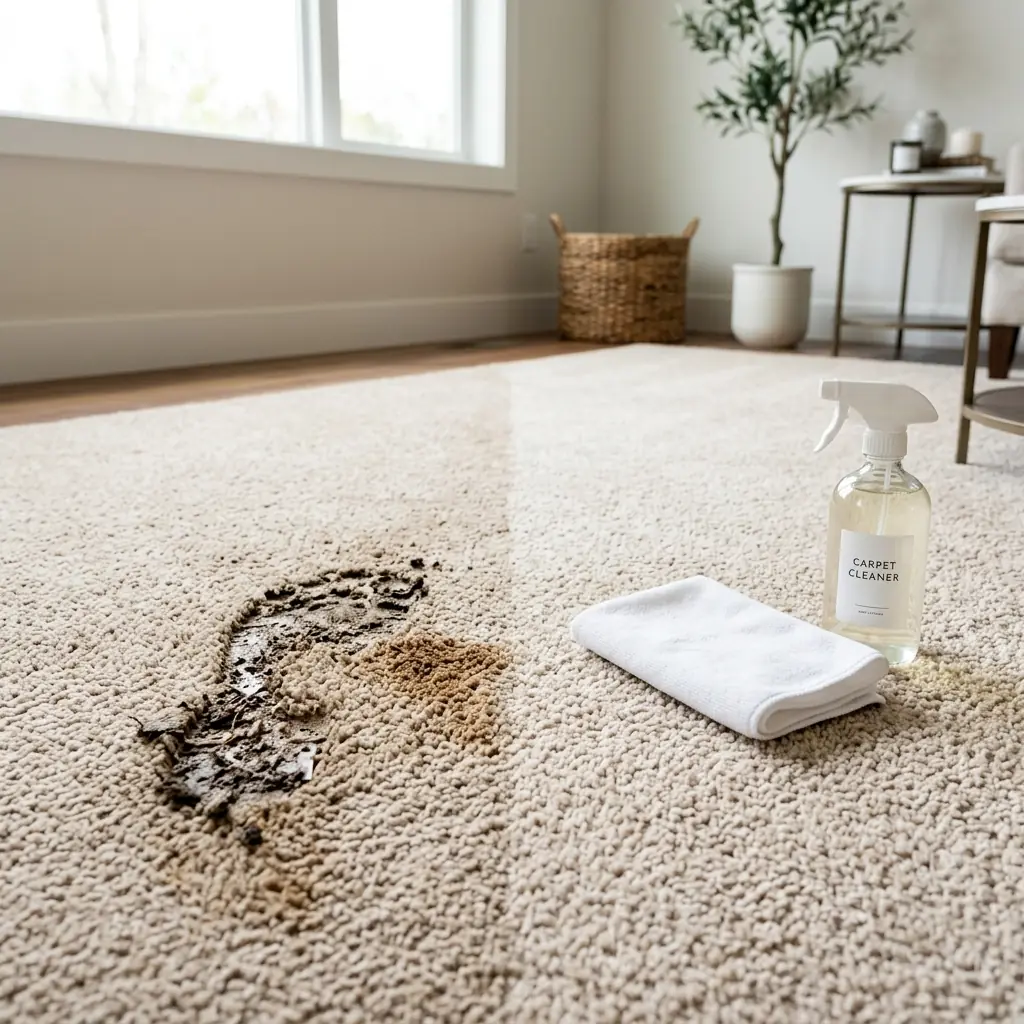
How to Remove Brisbane Red-Soil Stains from Carpet After a Storm
Short answer: keep people and pets off the area, remove loose grit, let thick mud dry enough to lift without smearing, vacuum slowly, then blot with a small amount of carpet-safe solution. Do not scrub, flood the carpet or use bleach. If stormwater has soaked the underlay, the stain covers a large area, or the carpet smells musty after drying, arrange an assessment rather than repeatedly wetting it at home.
Key Takeaways
- Brisbane red soil is easiest to remove when you separate loose mineral grit from the coloured residue instead of rubbing both deeper into the pile.
- Let a thick deposit become firm enough to lift, but do not leave a damp, contaminated carpet closed up in humid weather.
- Use cool water sparingly, blot from the outside towards the centre and test any product in a hidden spot first.
- Stormwater, sewage, mould, dye transfer and wet underlay need a professional assessment; they are not ordinary spot stains.
Why Brisbane storm mud leaves such stubborn carpet marks
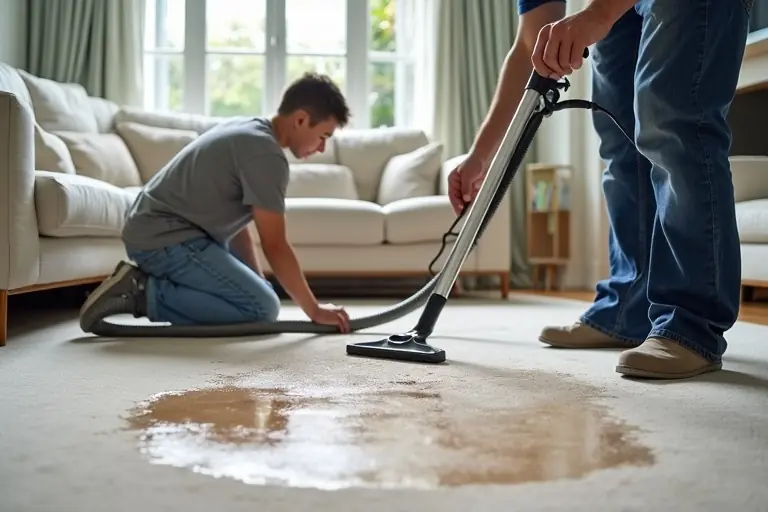
After a summer downpour, red or orange-brown soil can arrive on carpet in several ways. Shoes carry it through a doorway, children track it from a wet path, and pets bring it in on paws and fur. If rainwater has entered through a door, window or damaged roof, the water can also spread a thin veil of soil across a much wider area.
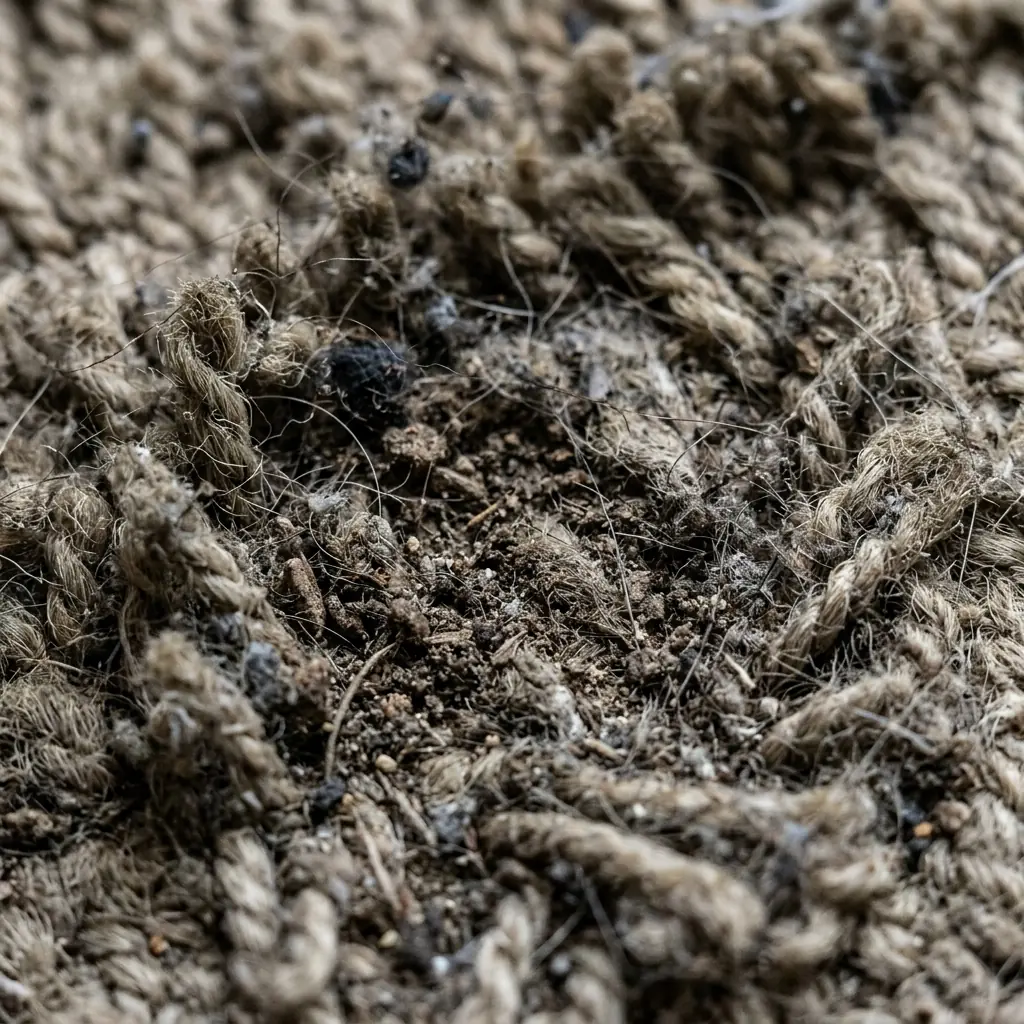
The colour is only part of the problem. The soil also contains fine mineral particles that work down between carpet fibres. While the mark is wet, those particles behave like a paste. Rubbing the paste breaks it into smaller particles and pushes it deeper. Once the water evaporates, the remaining minerals can make the pile look dull, stiff or orange around the original footprint.
There is an important distinction between tracked-in soil and genuine flood contamination. A few muddy footprints from a garden path can often be treated as a stain-removal job. Carpet touched by dirty stormwater, sewage, chemicals or unknown floodwater should be isolated and assessed. Cleaning it like an ordinary mark can spread contamination through the room.
What to do in the first 15 minutes
- Stop the traffic. Keep shoes, paws and bare feet away from the mark. Place a towel or plastic sheet beside it, not over a wet stain, so people have a clean route around the room.
- Find the water source. Close the door, fix the obvious entry point if safe, and check whether the carpet is wet beyond the visible orange patch. Photograph the affected area before moving furniture if you are renting or making an insurance enquiry.
- Remove surface clumps. Use the edge of a spoon, a blunt butter knife or a plastic card to lift thick mud. Work upwards rather than dragging sideways. Wipe the tool between passes.
- Do not add detergent yet. Extra liquid turns a manageable deposit into a larger wet area. It can also create a sticky residue that attracts more soil.
- Increase safe airflow. Open windows only if outside air is reasonably dry and the weather is safe. Keep electrical equipment away from standing water. Fans can help a lightly damp area, but they do not make contaminated floodwater safe.
For a separate explanation of how to deal with ordinary tracked-in dirt, see Fresho’s guide to getting mud and dirt stains out of carpet fast. The storm-specific safety checks below still apply.
How to remove a red-soil stain from carpet step by step
1. Check the carpet and the colour before treating it
Identify the fibre if you can: wool, nylon, polyester and blended carpets do not always react the same way to heat, moisture or chemicals. Look for a care label, ask the property manager or check your installation paperwork. Also note whether the stain is on the surface or whether the backing and underlay feel wet.
Before applying anything, test a small amount of plain water and your chosen carpet product in an inconspicuous corner. Press a white cloth on the test area. If colour transfers, the pile changes texture or a watermark appears, stop and seek advice. Red soil can make a pale carpet look worse temporarily as moisture redistributes the colour, so do not judge the treatment while the area is still wet.
2. Let thick mud firm up, then vacuum carefully
If the deposit is thick and still smearable, give it time to become crumbly rather than forcing the process with a hairdryer or heater. Once firm, lift the larger pieces and vacuum slowly in more than one direction. Hold the vacuum head level and avoid aggressive back-and-forth brushing, which can roughen the pile and grind grit into the base.
Empty the vacuum outside if possible. A machine full of fine soil can blow particles back into the room, and a damp vacuum bag can develop an odour. If the carpet is visibly wet or waterlogged, skip ordinary vacuuming unless the machine is designed for wet recovery.
3. Blot with minimal moisture
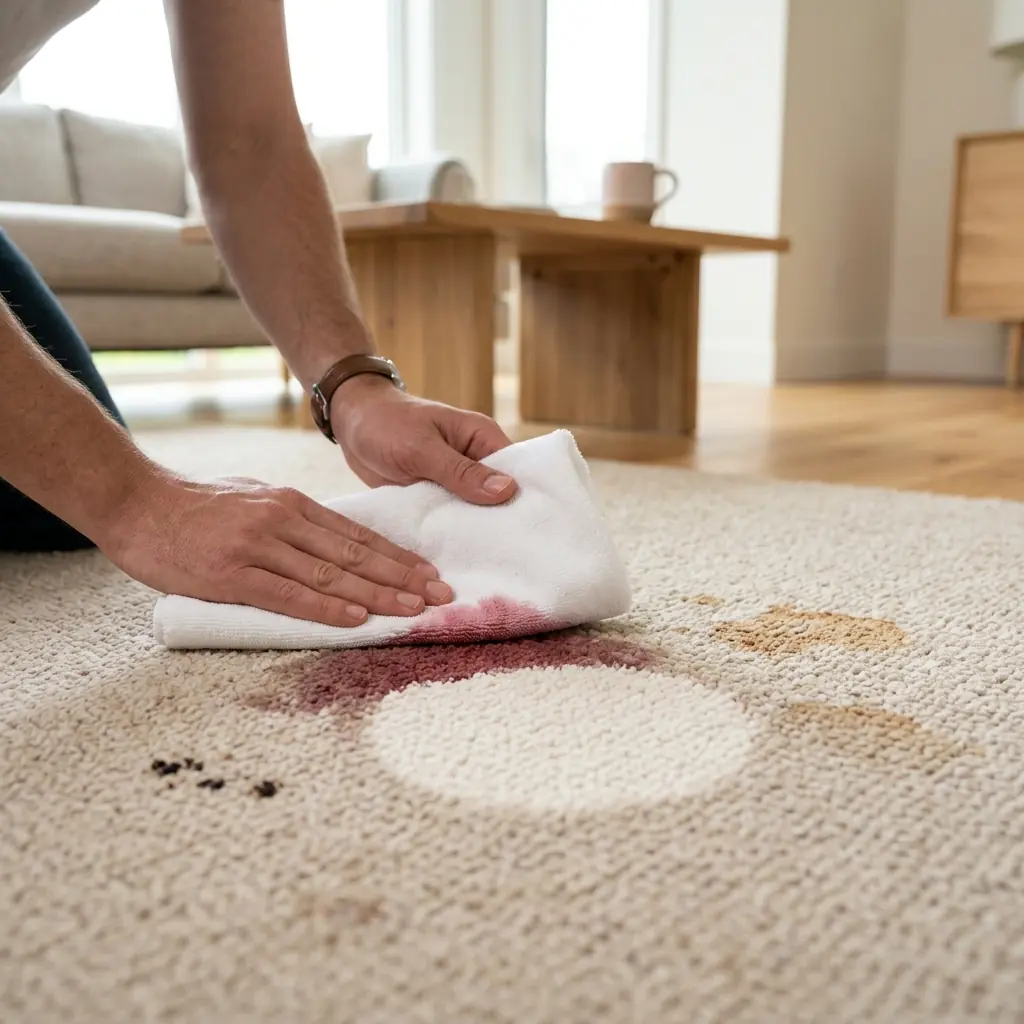
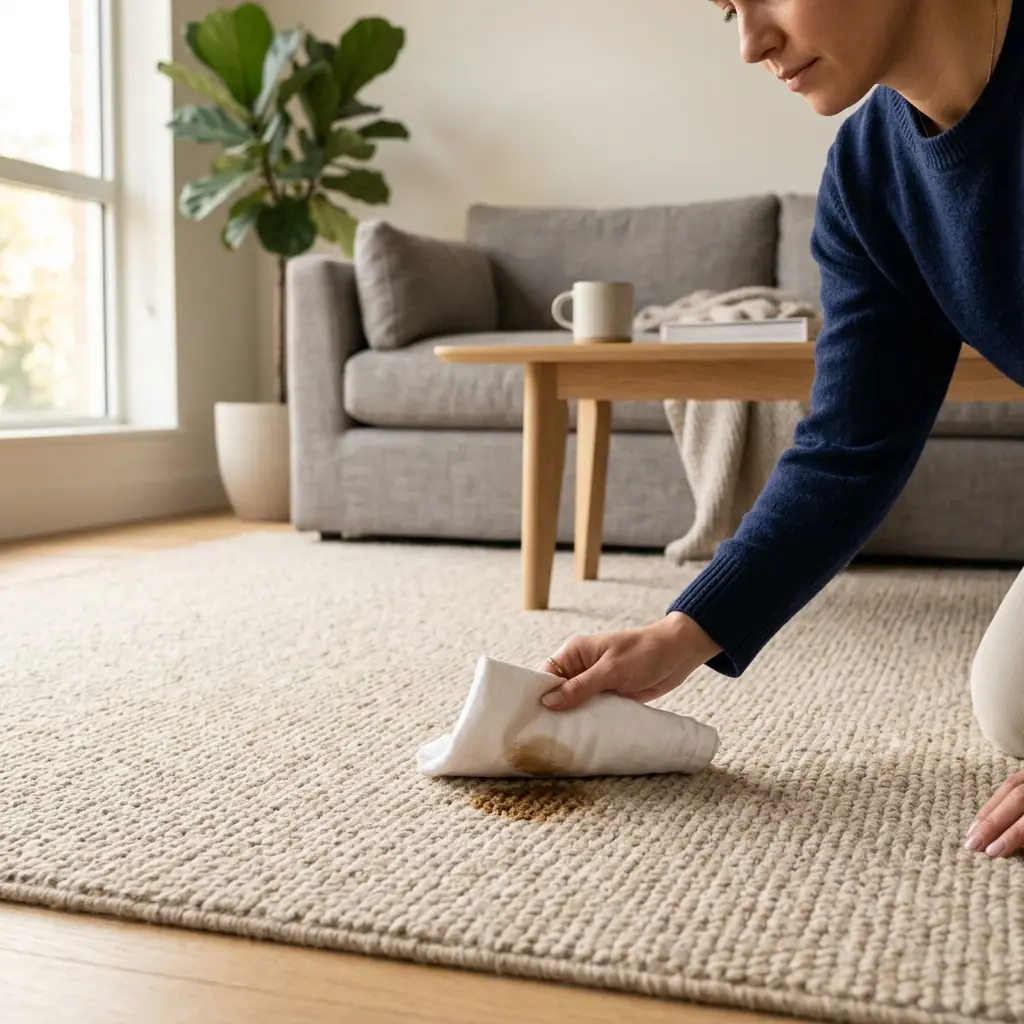
For a small, clean-looking soil mark, use a white, lint-free cloth dampened with cool water. Press and lift; do not scrub. Start at the outer edge and move towards the centre so the mark does not spread. Rotate to a clean section of cloth as colour transfers.
If water alone leaves a brown or orange shadow, use a product labelled for your carpet type and follow its dilution directions exactly. Apply the solution to the cloth rather than pouring it onto the floor. Keep the working area small. Reducing the amount of liquid is particularly important in Brisbane’s humid weather because moisture can remain below the surface after the pile feels dry.
4. Rinse residues out of the pile
After the colour has reduced, lightly blot with a separate cloth dampened with clean water. This helps remove detergent residue, but it is not a reason to saturate the carpet. Continue pressing with dry towels until little moisture comes away. Put a clean, absorbent towel over the spot with a flat, weighted object for a short period, then remove it and allow air to circulate.
Never combine products. In particular, do not mix bleach, vinegar, ammonia, peroxide or multiple stain removers. Household chemistry is not a substitute for identifying the fibre and stain. Bleach can permanently strip colour, and an apparently mild product can still damage a wool or plant-based fibre.
5. Recheck after the carpet has dried
A stain may look improved while wet and reappear as the remaining soil wicks upwards during drying. If a faint edge returns, do not keep adding solution every hour. Vacuum once the carpet is fully dry and inspect the underlay, skirting board and nearby furniture for continuing dampness.
For more on why marks can reappear, read why carpet stains come back after cleaning. Wicking is only one possible cause; hidden moisture, residue, pile damage and a stain that has changed the fibre can all look similar.
When DIY treatment is the wrong approach
Stop home treatment and request professional advice when the carpet has been under water, the water source is unknown, the affected area is larger than a few footprints, or the backing feels soft and wet. Also pause if you can smell sewage, fuel, chemicals or a strong musty odour. Do not allow children or pets into a contaminated area while you decide what to do.
Queensland Health advises drying flood-affected buildings quickly and taking mould precautions after a disaster. Its guidance on mould after a disaster is general public-health information, not a diagnosis of your home. If anyone develops breathing symptoms, skin irritation or other health concerns, contact a GP or an appropriate health service. For floodwater contamination, follow advice from the relevant Queensland authority, insurer, landlord or restoration professional.
Carpet can also be beyond stain removal when the fibres are bleached, melted, permanently distorted or bonded with soil. A cleaning assessment can distinguish removable residue from fibre damage. It is better to hear that distinction early than to keep rubbing a small mark until the damaged patch is larger than the original stain.
How professional carpet cleaning handles storm-borne soil
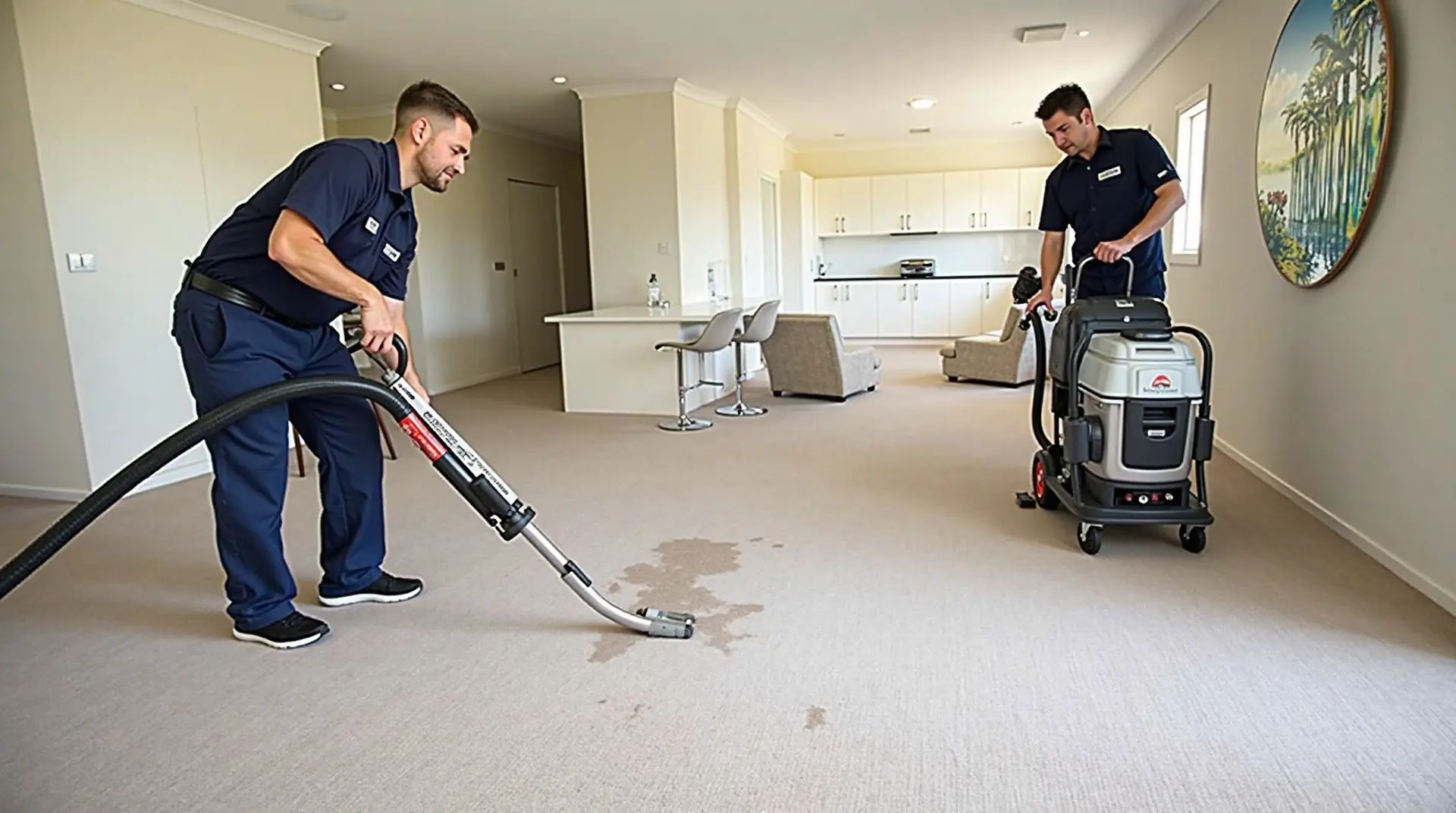
A suitable professional process starts with inspection rather than a promise that every mark will disappear. The technician should check the carpet construction, identify the likely soil, discuss pre-existing damage and establish whether the carpet is safe to wet-clean. That is especially important after a storm because a surface stain and water intrusion can exist together.
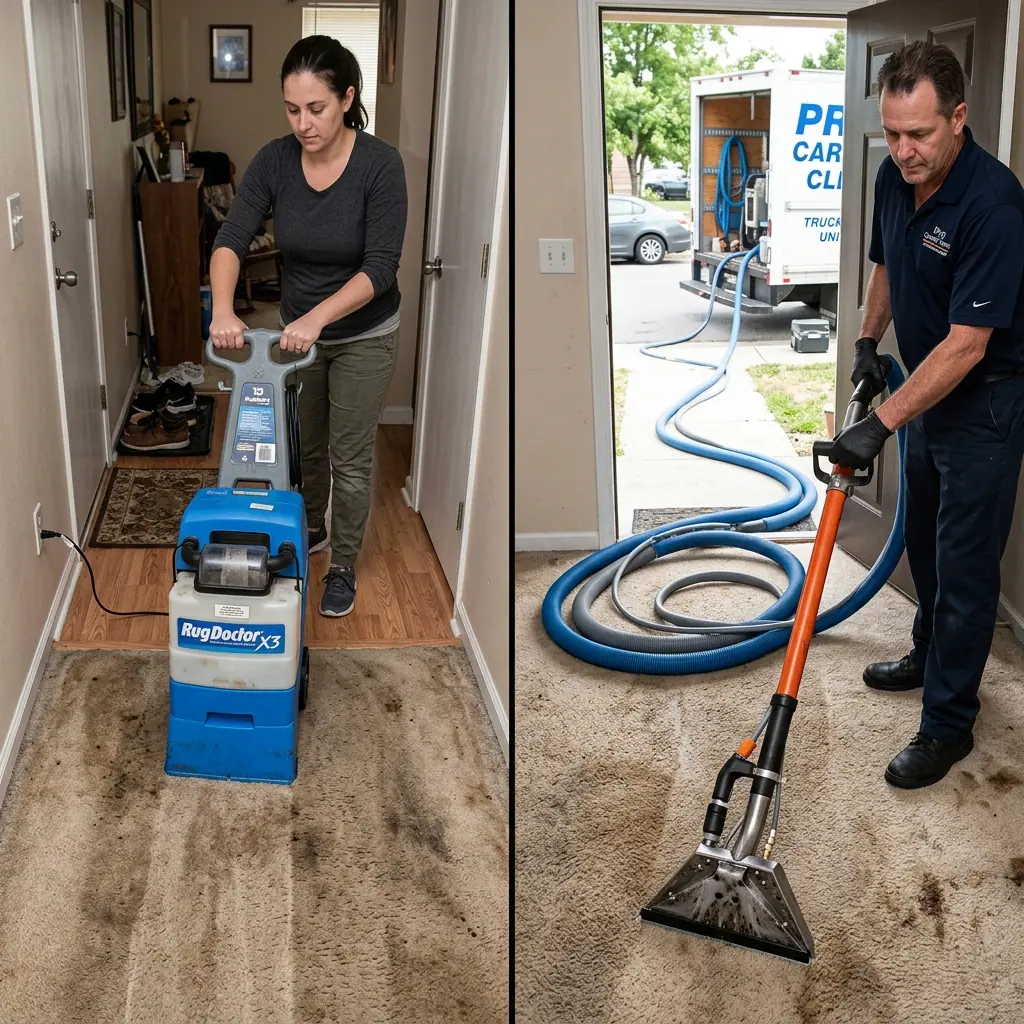
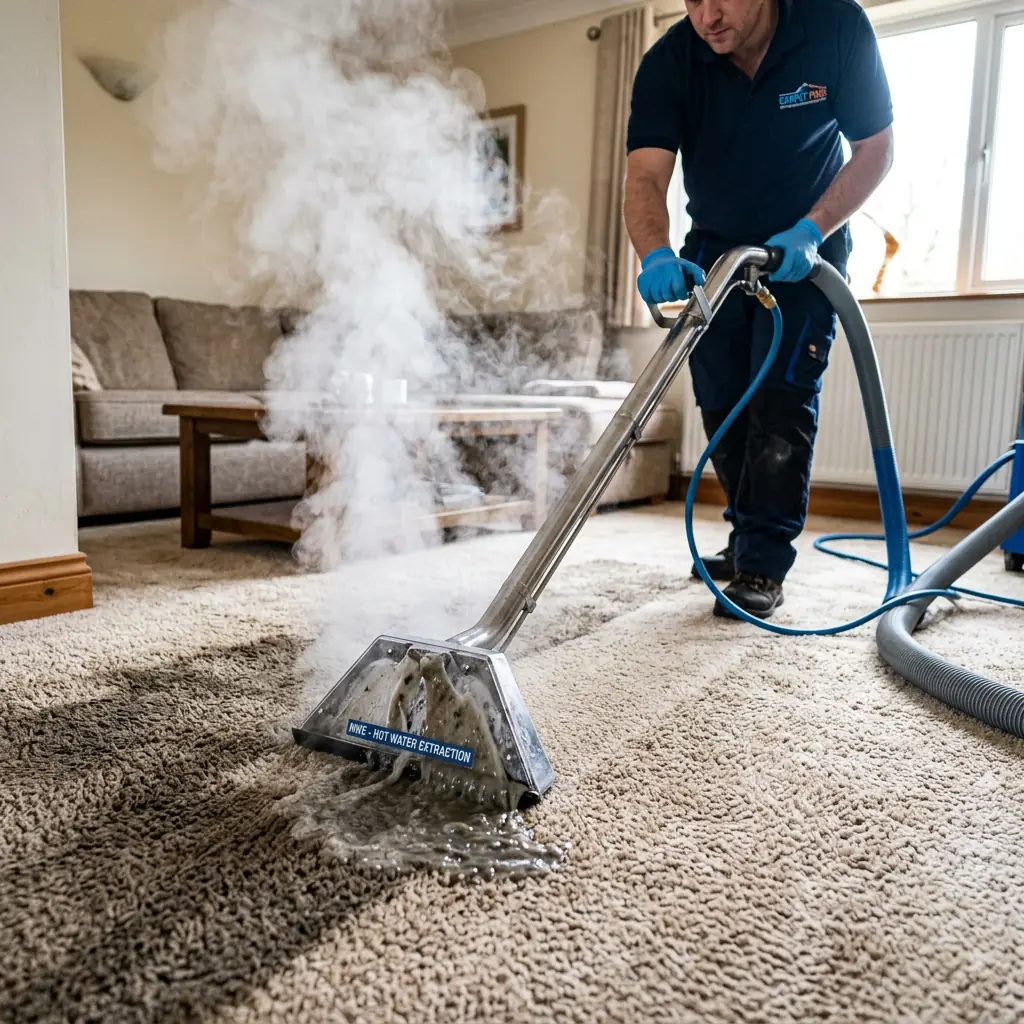
Where hot-water extraction is appropriate, the usual sequence is controlled pre-treatment, agitation suited to the fibre, a measured rinse and strong recovery of dirty water. The aim is to release soil without leaving the carpet unnecessarily wet. Drying advice matters just as much as the stain treatment: airflow, room temperature, humidity and the moisture in the underlay all affect the result.
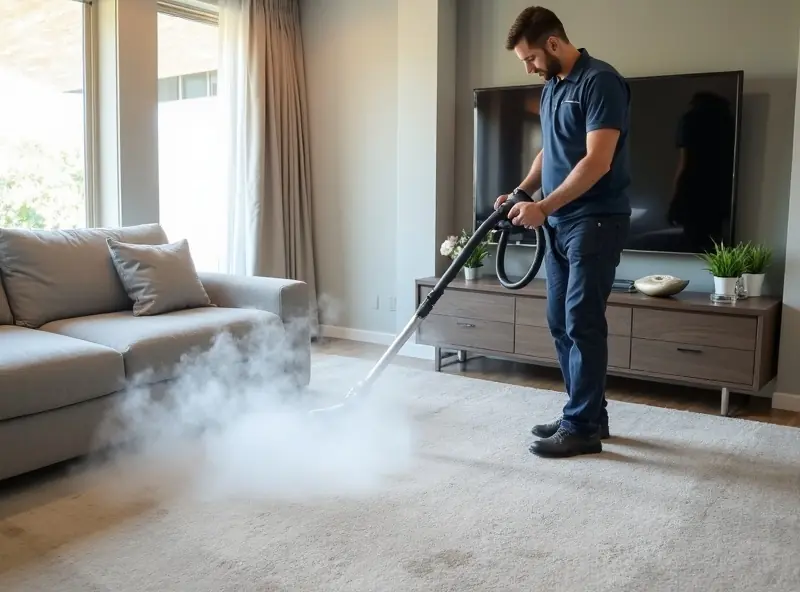
Fresho explains its inspection, spot assessment, controlled rinse and extraction process on the steam carpet cleaning Brisbane service page. The page also notes that difficult marks and remaining limitations should be discussed rather than treated with a one-result-fits-all promise. That is the right expectation for red soil, which may have stained the fibre, backing or both.
If your carpet was only lightly splashed, tell the cleaner exactly what happened: when the storm occurred, whether the water came from outside, what products you have applied, and whether the area has dried and reappeared. Photos taken in good light can help with an initial discussion, but an on-site assessment is more reliable for moisture and fibre questions.
How to reduce red-soil stains after the next storm
- Keep a washable mat inside and outside frequently used doors, and clean the mats before they become saturated.
- Use a separate towel for wet paws and avoid letting pets cross carpet immediately after they come in from the yard.
- Vacuum entry paths regularly, especially after dry weather followed by rain. Fine dust becomes mud when moisture arrives.
- Move light furniture away from a damp edge so air can reach the carpet, but do not drag heavy furniture across wet pile.
- Check door seals, window tracks, roof flashings and nearby gutters if the same room becomes wet after every storm.
- Ask about fibre protection only after the carpet is clean and dry. A protector may support future maintenance, but it cannot repair existing colour loss or make contaminated floodwater safe.
Brisbane humidity can make a surface-dry carpet misleading. Fresho’s article on drying floors before humidity brings back a musty smell covers airflow and moisture checks that are useful after a storm, whether or not you have arranged a professional clean.
Frequently asked questions
Should I clean red mud while it is wet?
Do not rub wet mud. Lift any thick clumps carefully and allow a small, clean deposit to firm up before vacuuming. If the carpet is wet because stormwater entered the room, treat the situation as a moisture and contamination problem first, not just a stain.
Can I use vinegar on Brisbane red soil?
Vinegar is not a universal carpet cleaner. It may affect dyes, odours and fibre finishes, and mixing it with other products can create a safety risk. Use only a carpet-labelled product that suits the fibre, test it discreetly and follow the label.
Will steam cleaning remove every red-soil mark?
No responsible cleaner can guarantee that every mark will disappear. Hot-water extraction can remove loose and embedded soil when the carpet is suitable and the colour has not permanently changed, but age, heat, previous chemicals, fibre damage and dye transfer affect the result. An inspection should set expectations before work starts.
How long will the carpet take to dry after cleaning?
Drying depends on fibre, construction, weather, ventilation, the amount of water used and whether the underlay was affected. Keep people off the carpet as advised, increase safe airflow and do not replace furniture until the carpet and edges are dry. A musty smell or persistent coolness underfoot warrants follow-up.
Is red soil a reason to replace the carpet?
Usually not when the issue is limited to removable tracked-in soil. Replacement becomes a consideration when carpet or underlay is contaminated, remains damp, has widespread mould, or has permanent fibre or colour damage. A professional assessment can help separate a cleanable stain from a restoration or replacement issue.
Conclusion
The safest way to remove Brisbane red-soil stains after a storm is to slow down: stop traffic, lift the deposit, vacuum once it is firm, blot with very little moisture and allow the carpet to dry fully. Avoid aggressive scrubbing and improvised chemical mixes. Most importantly, distinguish a few muddy footprints from carpet affected by contaminated stormwater or hidden moisture.
When the stain is widespread, keeps returning or is accompanied by dampness or odour, a measured assessment is more useful than repeated DIY attempts. It protects the carpet from over-wetting and gives you a clearer answer about cleaning, drying, restoration or replacement.
Storm stain still showing? Request an assessment before it spreads
Tell Fresho Carpet Cleaning Brisbane what happened, where the water came from and how large the affected area is. You can review the steam carpet cleaning service and request a quote or book an assessment for your carpet. No result should be promised until the fibre, stain and moisture situation have been checked.
Request a quote or book your Brisbane carpet assessment
Sources and references
- Queensland Health: Mould after a disaster — general guidance on drying and mould precautions after flood or disaster conditions.
This article provides general cleaning information for Australian readers. It is not a substitute for professional restoration, medical, legal, insurance, landlord, council or public-health advice. Stormwater contamination and mould should be handled according to the circumstances and relevant authority guidance.
Fresho Carpet Cleaning Brisbane — practical carpet-care guidance for Brisbane homes, units and rentals.
Urgent hazards such as electrical risk, suspected contamination or fire damage should be handled by the relevant emergency service or an appropriate professional.