How to Remove Red Wine Stains from Carpet: Step-by-Step
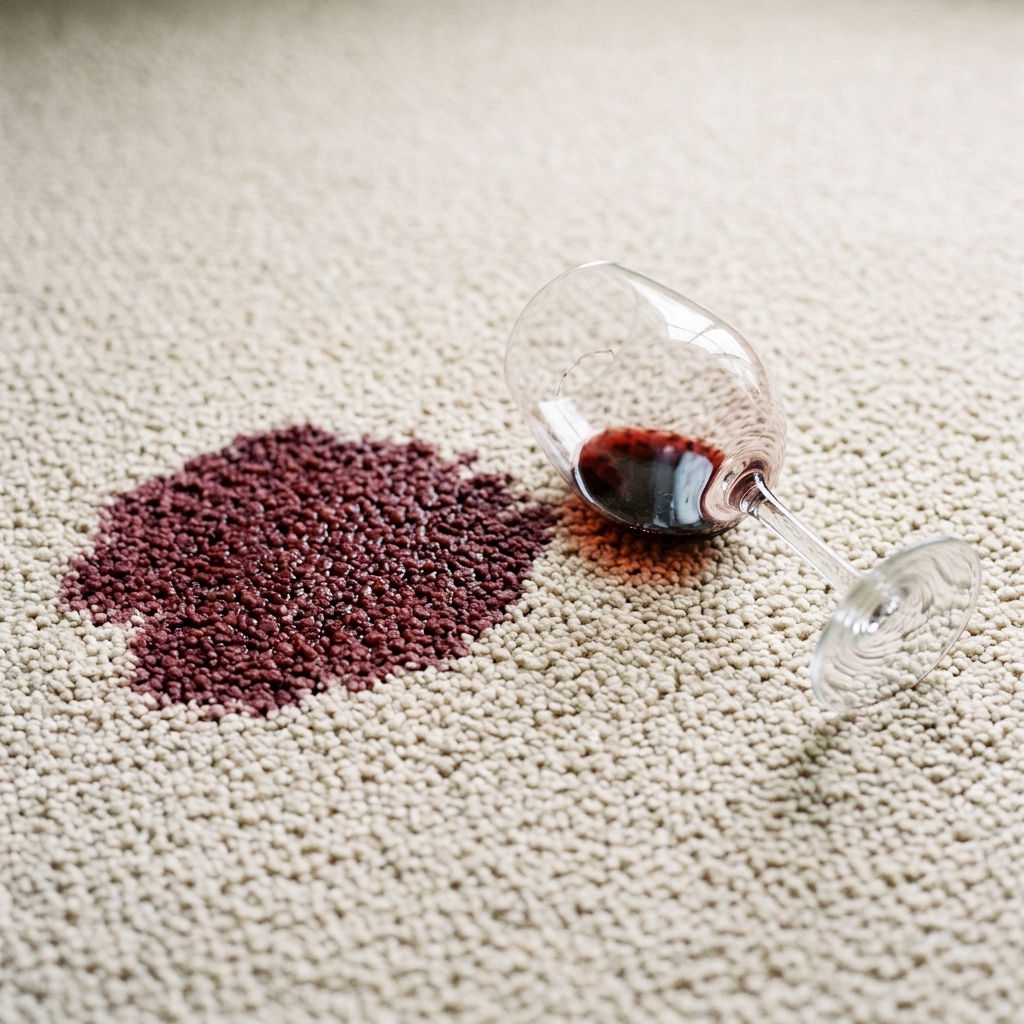
Few carpet mishaps trigger instant panic quite like a glass of red wine going over. The deep pigment in red wine makes it one of the most notorious carpet stains, and unlike many spills, it doesn't give you much time to think - the colour begins soaking into carpet fibres within seconds. But a red wine stain, even a fresh one that's already started to set, is very often fully removable if you act quickly and use the right sequence of steps.
This guide walks through exactly how to remove a red wine stain from carpet, what household products actually work, and how to handle a stain that's already dried.
Act Immediately - Speed Matters More Than Anything Else
The single biggest factor in whether a red wine stain comes out fully is how fast you respond. Wine that's had time to dry has usually bonded more deeply with the carpet fibres, making it noticeably harder to fully remove. If you can get to it within the first minute or two, your odds of a complete removal are very high.
What You'll Need
- Clean white cloths or paper towels (avoid coloured towels, which can transfer dye onto wet carpet)
- Cold water
- Mild dish soap
- Hydrogen peroxide (3% solution) - for light-coloured carpets only
- White vinegar (as an alternative or second-stage treatment)
- Baking soda (optional, for lifting residual moisture and odour)
- A soft-bristled brush
Step-by-Step: Removing a Fresh Red Wine Stain
Step 1: Blot, Don't Rub
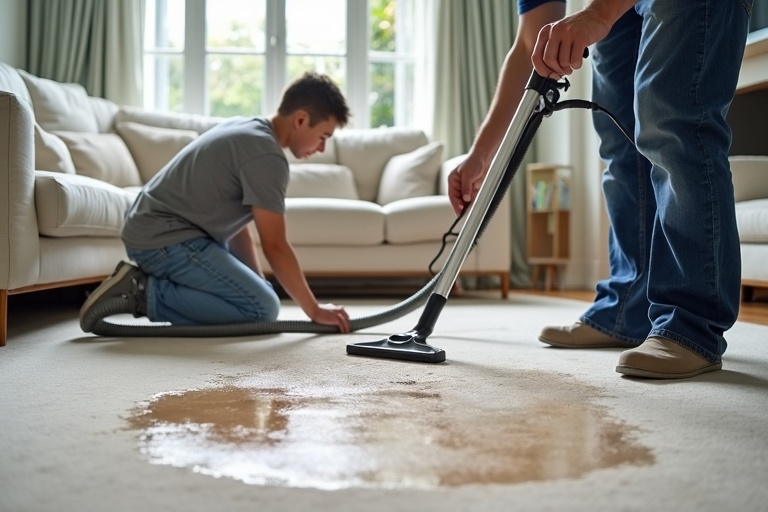
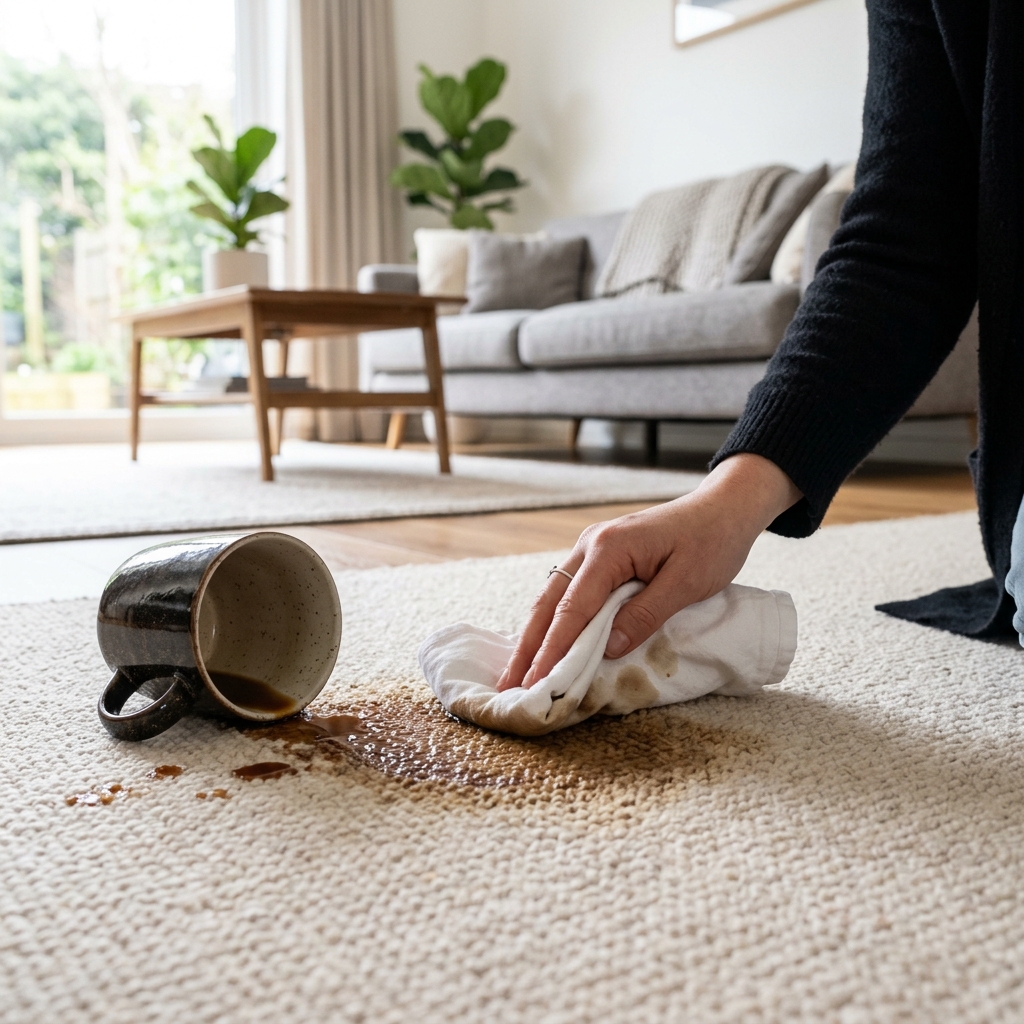
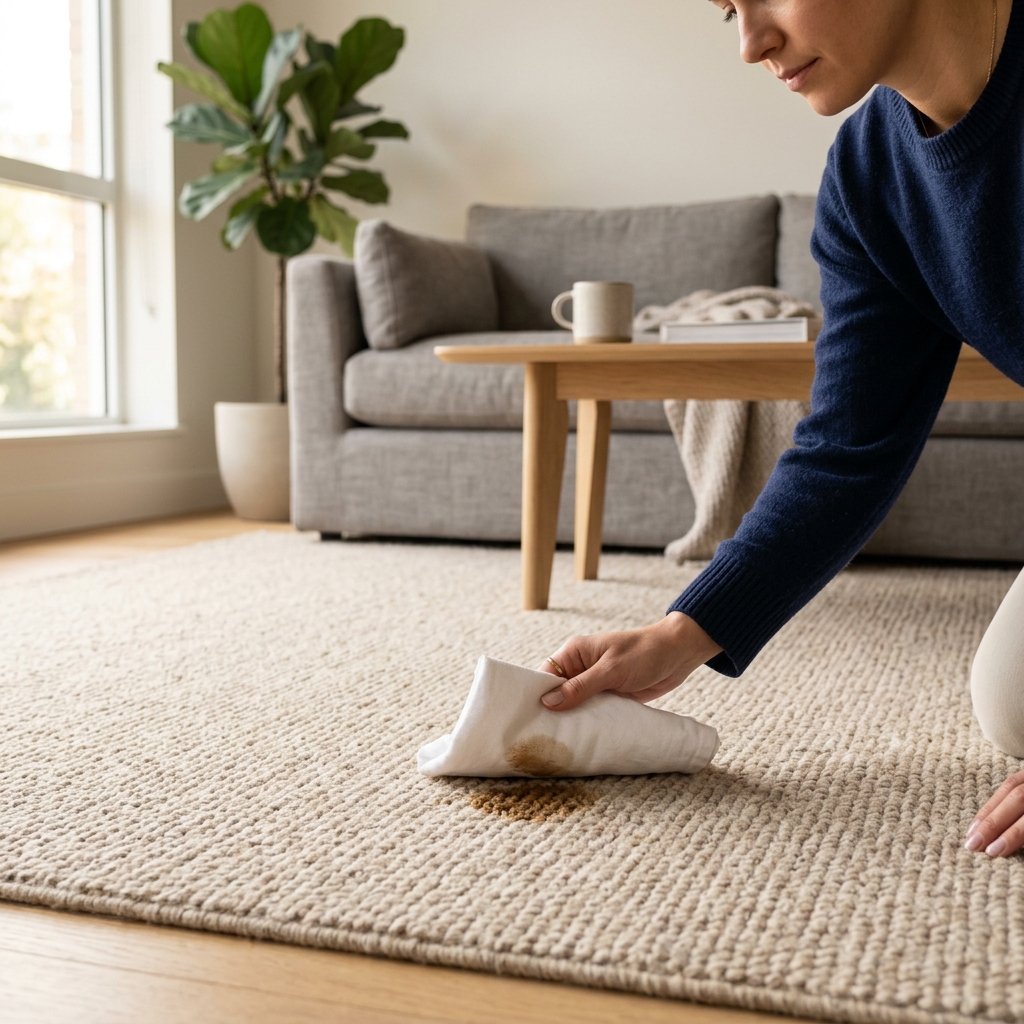
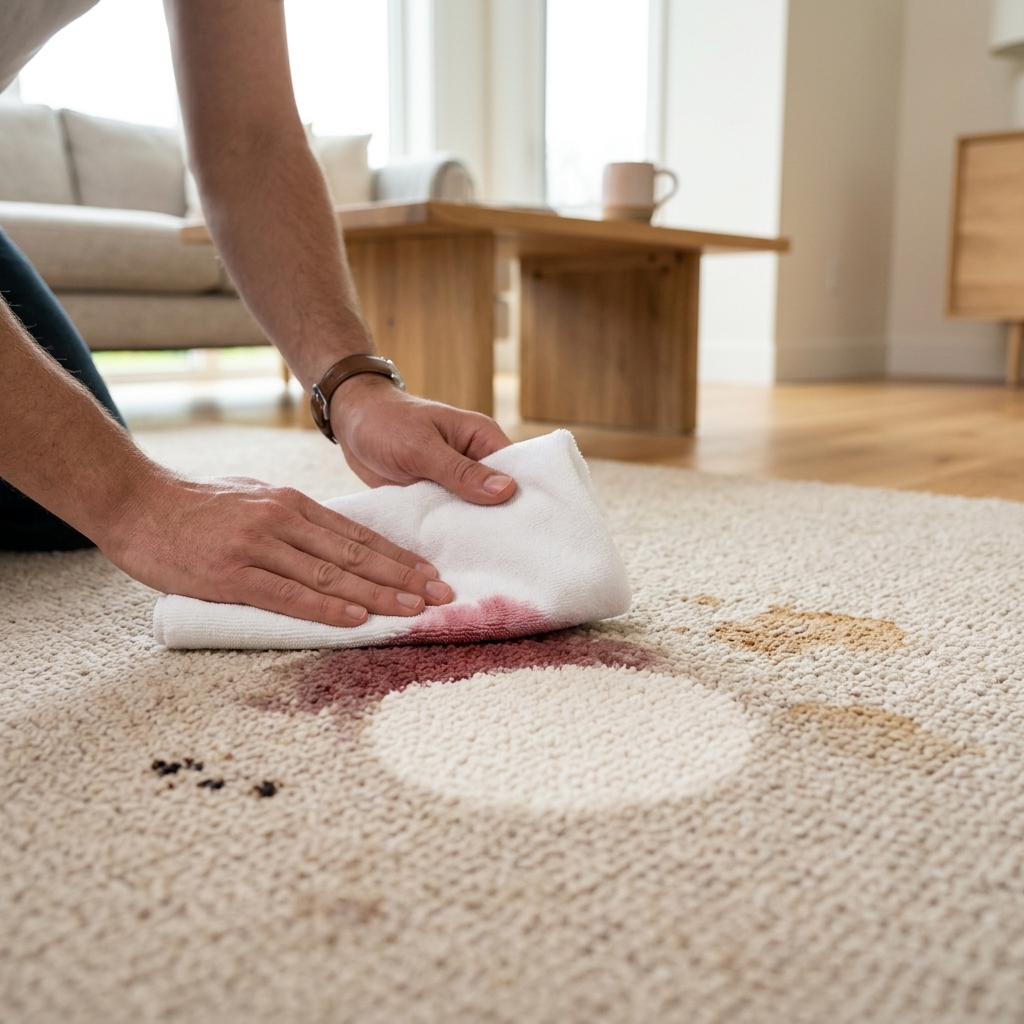
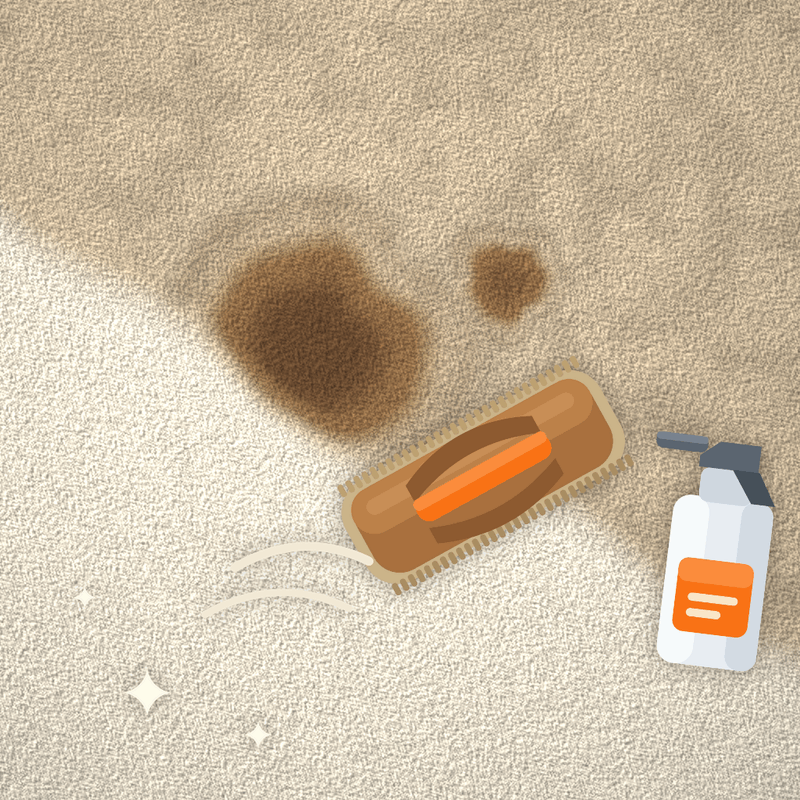
Using a clean white cloth or paper towel, blot the spill immediately with firm, steady pressure. Work from the outside edge of the stain toward the centre to stop it from spreading further into clean carpet. Resist the urge to rub or scrub, which pushes the wine deeper into the fibres and can damage the pile - blotting alone will lift a significant portion of the liquid before it has a chance to set.
Step 2: Flush With Cold Water
Once you've blotted up as much wine as possible, dampen a fresh cloth with cold water and continue blotting the area. This helps dilute the remaining pigment and lift more of it out of the fibres. Avoid pouring water directly onto the carpet, since too much liquid can push the stain into the padding underneath - a damp cloth gives you enough moisture without oversaturating the area.
Step 3: Apply a Dish Soap Solution
Mix one tablespoon of mild dish soap with two cups of cool water. Apply the solution to a clean cloth (not directly onto the carpet) and blot the stain, working from the outside in. Dish soap helps break down the remaining wine residue and lift it away from the fibres. Let the solution sit on the stain for a minute or two before blotting again, and repeat as needed.
Step 4: Treat Remaining Discolouration With Hydrogen Peroxide (Light Carpets Only)
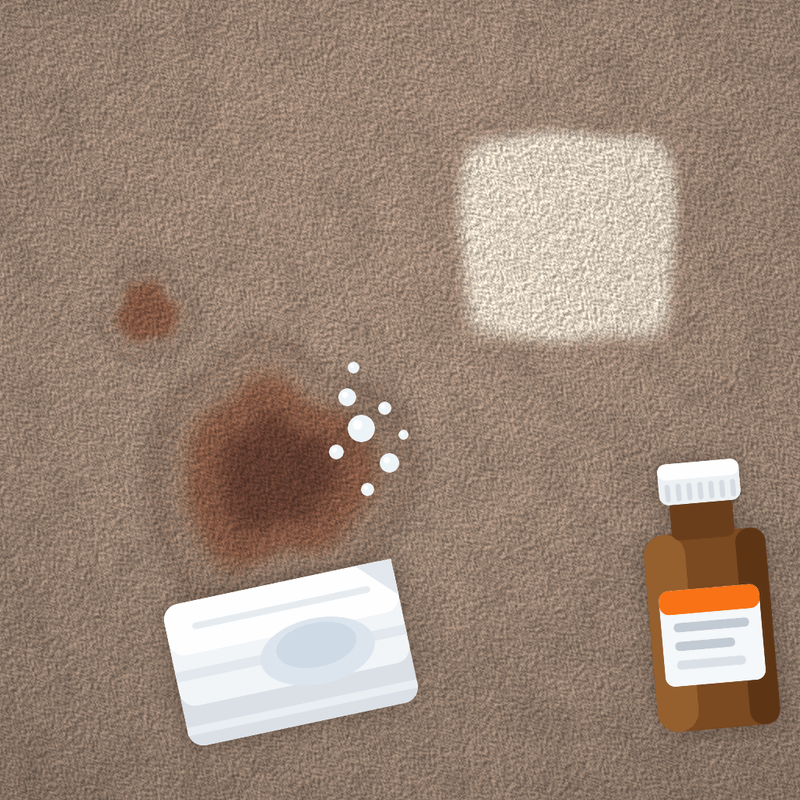
If a faint stain remains after the dish soap treatment and your carpet is light-coloured, hydrogen peroxide can help lift the last of the pigment. Always test it on a hidden section of carpet first and wait several minutes to confirm there's no colour change, since hydrogen peroxide can lighten some carpet dyes. If the test area looks fine, apply a small amount directly to the stain with a cloth, let it sit for a few minutes, then blot with a clean, damp cloth to rinse.
For dark or patterned carpets, skip hydrogen peroxide and instead repeat the dish soap and cold water treatment, or use a white vinegar solution instead (below), since peroxide carries a higher risk of visible lightening on darker fibres.
Step 5: Try a White Vinegar Solution as an Alternative
If you'd rather avoid hydrogen peroxide, or the stain persists after treatment, a mixture of one tablespoon white vinegar, one tablespoon dish soap, and two cups of warm water can be applied the same way - blotted onto the stain with a cloth, left to sit briefly, then blotted up with a clean, damp cloth to rinse. Vinegar's mild acidity helps break down the remaining pigment without the bleaching risk that comes with hydrogen peroxide.
Step 6: Rinse and Dry Thoroughly
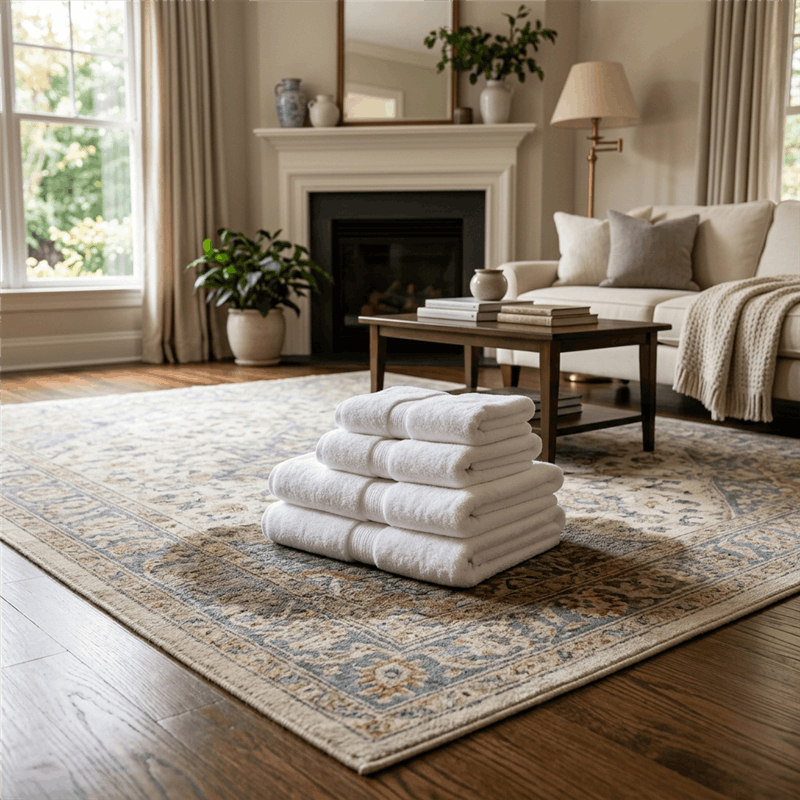
Once the stain has lifted, blot the area with a cloth dampened in plain cool water to remove any leftover soap or vinegar residue, since residue left behind can attract dirt over time and cause the spot to look dingy later. Blot dry with a clean towel, then place a stack of dry paper towels over the area, weighed down with a flat, heavy object, and leave it for several hours or overnight to draw out any remaining moisture from deep in the fibres.
Step 7: Fluff the Carpet Pile
Once the area is fully dry, vacuum gently or brush the fibres with your fingers or a soft brush to restore the carpet's natural texture, which can flatten slightly from the blotting and drying process.
Removing a Dried or Set-In Red Wine Stain
If the wine has already dried, don't worry - it's often still removable, just with an extra step. Start by making a paste with one tablespoon of baking soda and enough water to form a thick consistency, then spread it over the stain and let it sit for several hours or overnight to draw the pigment out of the fibres. Once dry, vacuum up the baking soda residue, then use the dish soap or vinegar method above to treat any remaining discolouration.
For particularly stubborn dried stains, a commercial red wine stain remover, formulated specifically to break down the tannins and pigments in wine, can be more thorough than household products alone - use the product instructions and always test on a hidden area first.
What Not to Do
- Don't use hot water - heat can help set the pigment in red wine more firmly into the fibres
- Don't rub or scrub the stain, which spreads it and can damage the carpet pile
- Don't use red or coloured cloths or towels to blot, since dye can transfer onto damp carpet
- Don't skip the hidden-area test before using hydrogen peroxide or vinegar, especially on darker or patterned carpet
- Don't oversaturate the area with liquid, which can push the stain into the padding beneath and make it harder to fully remove
A Common Myth: White Wine Doesn't Actually Remove Red Wine Stains
There's a long-standing idea that pouring white wine over a red wine stain neutralises it - this isn't well supported and mostly just adds more liquid (and more sugar and acid) to the carpet without meaningfully lifting the red pigment. Cold water, dish soap, and a proper blotting technique are simply more reliable than reaching for another bottle.
When to Call a Professional
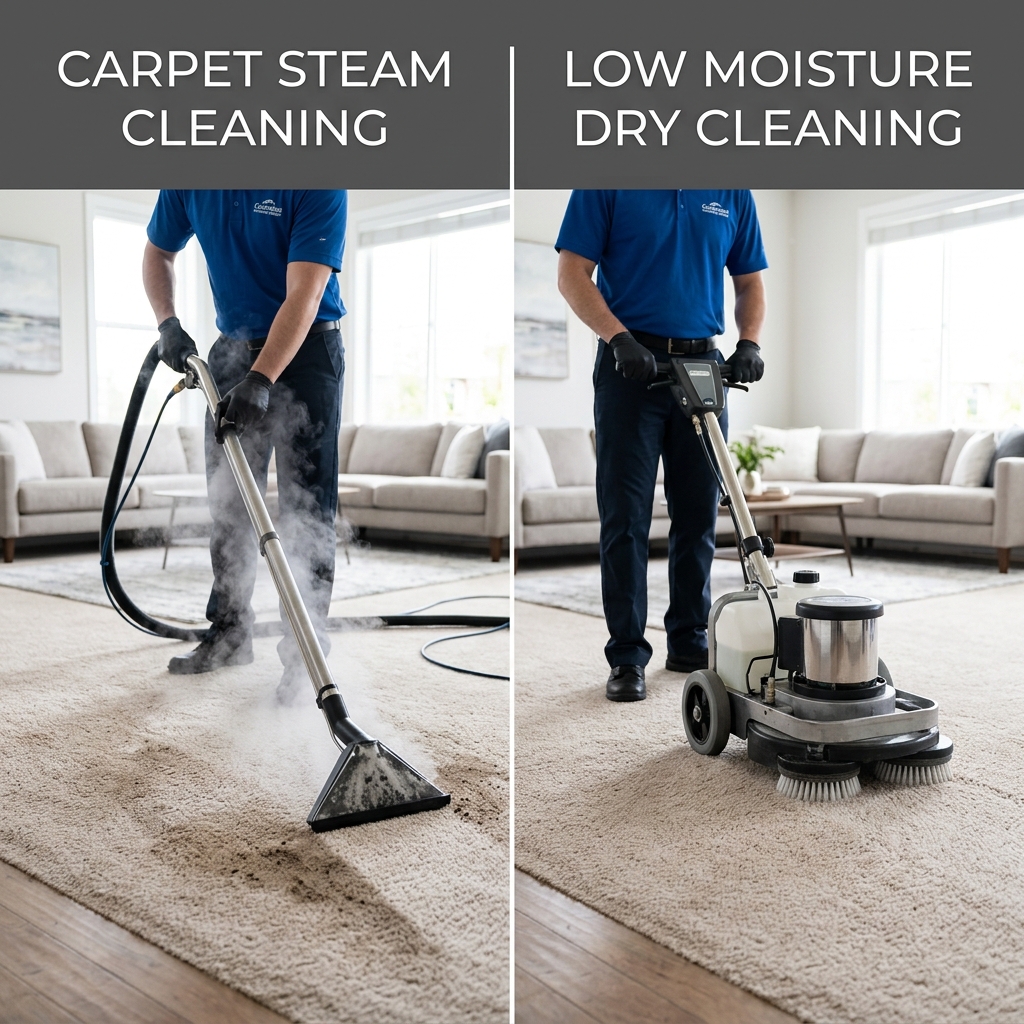
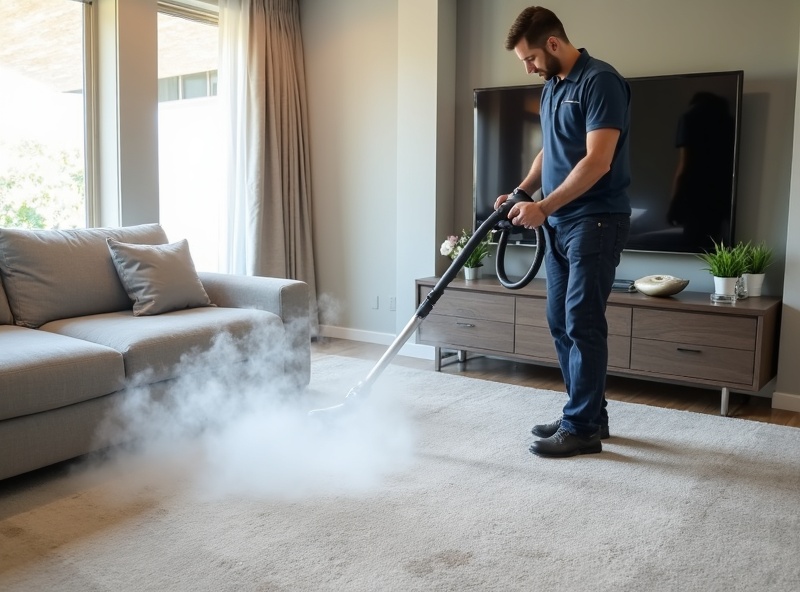
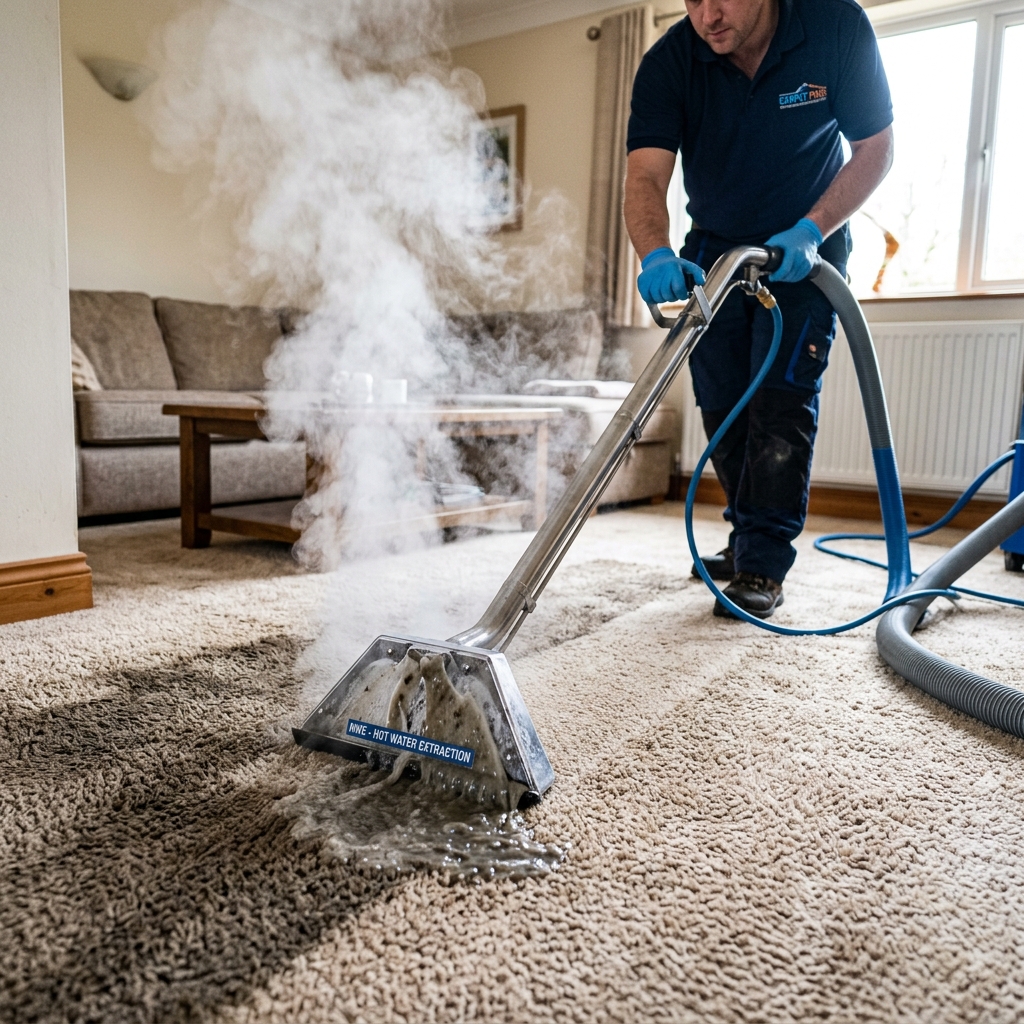
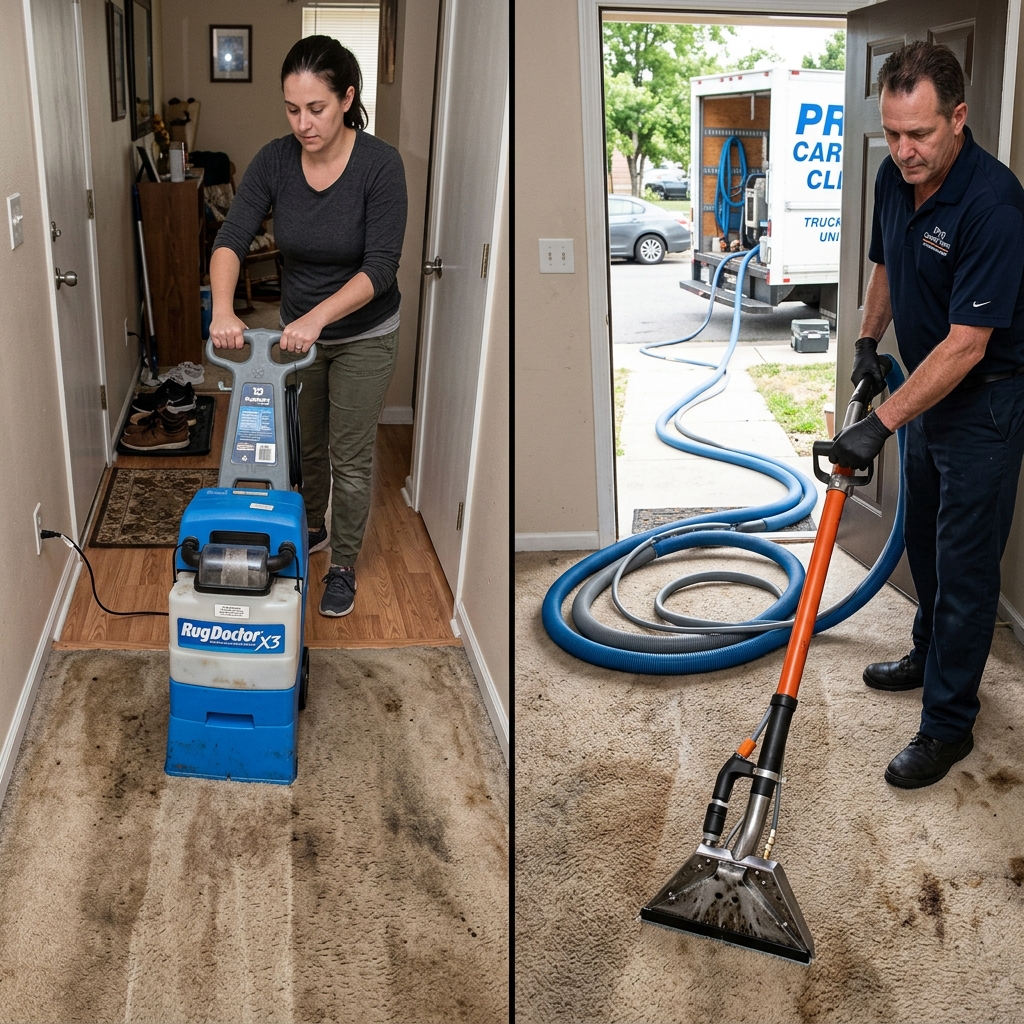
If the stain is on a wool or high-value carpet, has been sitting for more than a day or two, covers a large area, or hasn't responded to a couple of rounds of home treatment, it's worth calling a professional carpet cleaner rather than continuing to treat it yourself. Professionals have access to hot water extraction equipment and wine-specific stain treatments that can lift pigment a home method sometimes can't, without the risk of over-wetting the carpet or damaging delicate fibres through repeated DIY attempts.
The Bottom Line
A red wine spill feels like a disaster in the moment, but it's one of the more manageable carpet stains if you act quickly: blot immediately, flush with cold water, treat with a dish soap solution, and then treat with hydrogen peroxide or vinegar if any discolouration remains. Even a dried stain has a good chance of coming out with a baking soda paste and a bit of patience. Keep the process calm and methodical, and there's a good chance your carpet will look like nothing ever happened.