Why Does Carpet Smell Musty After Cleaning in Brisbane's Humid Weather?
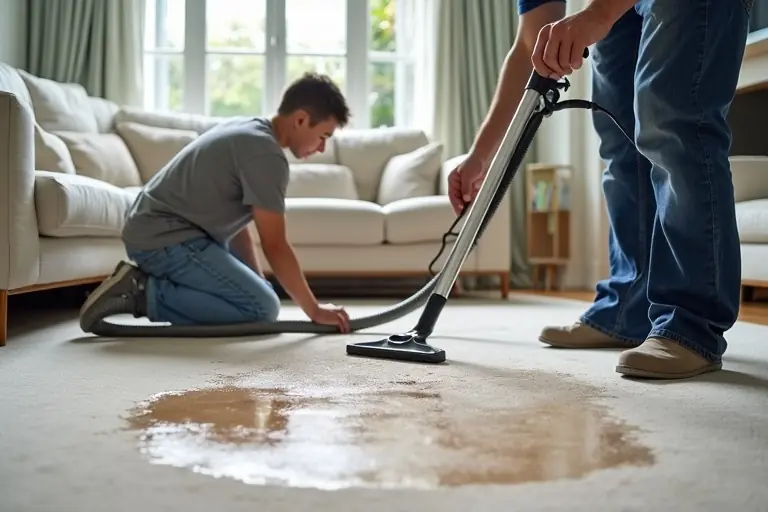
Brisbane homeowners ask us about this more than almost anything else. The carpet was cleaned, it looked excellent, and two or three days later the room has a damp, cupboard-like smell that was not there before. It is stronger in the morning, it fades a little when the air conditioning has been running, and it seems to sit right at floor level.
Nine times out of ten this is not a sign of a bad clean. It is a drying problem, and in a subtropical climate drying is genuinely harder than most people expect.
Why Humidity Changes Everything
Carpet dries by handing its moisture over to the air around it. How quickly that happens depends on how much moisture the air is already carrying. On a dry winter day in a southern city, air pulls water out of a carpet quickly. In Brisbane, where relative humidity regularly sits between 65 and 80 per cent through the warmer months and can stay high for days after a storm, the air has far less capacity to take anything on.
The practical effect is that a carpet which would dry in four to six hours in dry conditions can easily take twelve to twenty-four hours here, and longer in a closed-up house. That extended damp window is when the musty smell develops.
What Is Actually Producing the Smell
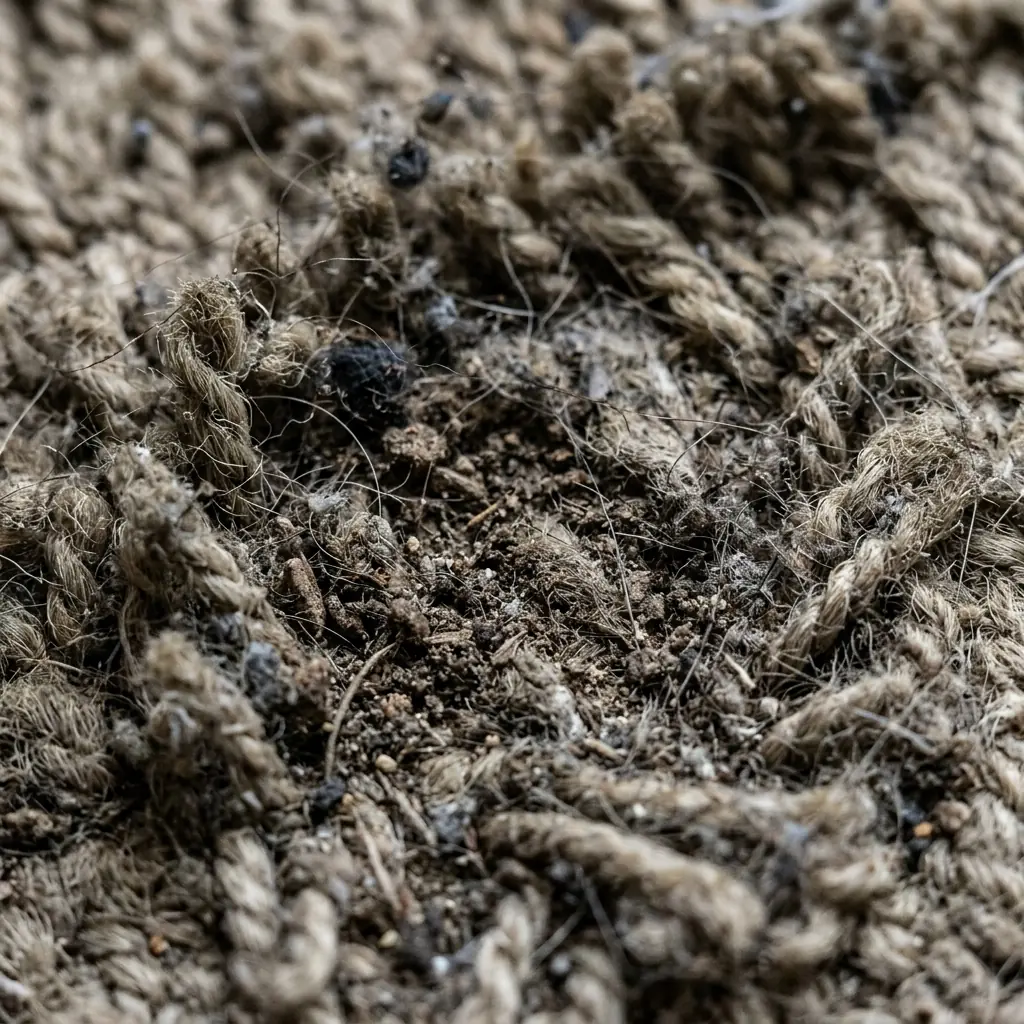
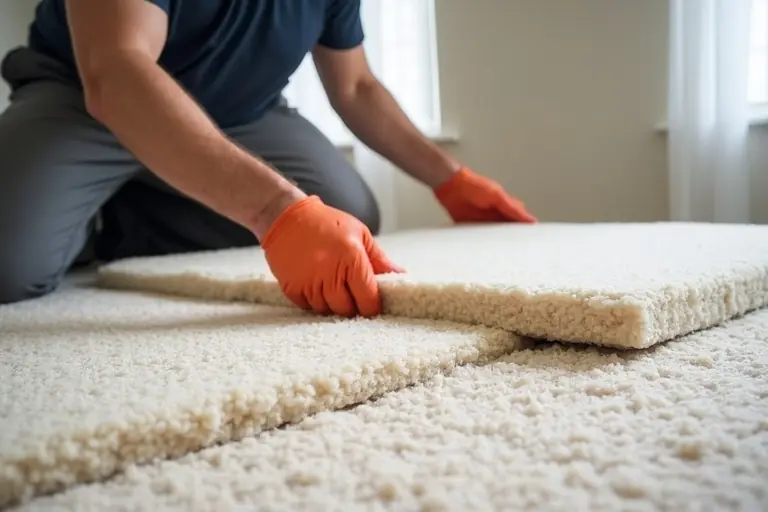
The odour comes from bacteria and mould becoming active in the damp backing and underlay. Underlay is porous foam or rubber designed to hold air, which also makes it very good at holding moisture, and it sits in the dark against the floor where nothing dries quickly.
Once that activity starts it releases the compounds we recognise as that damp, wet-cardboard smell. It is the same process that makes a towel left in a bag overnight smell the way it does, and the timing is similar: noticeable somewhere between twenty-four and seventy-two hours after the carpet got wet.
Why It Is Worse in Some Rooms
Rooms on the southern side, rooms with a single window, rooms where furniture went straight back, and ground-floor rooms over a poorly ventilated subfloor all dry more slowly. In Queenslanders and older timber homes, moisture rising from the subfloor keeps the underlay damp regardless of what is happening above it.
The Mistake That Makes It Worse
The instinctive response is to close the house up and run the air conditioner. That is half right. Air conditioning does dehumidify, and it is genuinely useful. Closing every window and door is the part that hurts, because it removes the air exchange that carries moisture out of the room.
The other common mistake is opening the windows wide on a humid Brisbane morning. Between roughly 5am and 9am, outdoor humidity is often at its daily peak, and you can end up drawing more moisture in than you let out.
What Actually Works
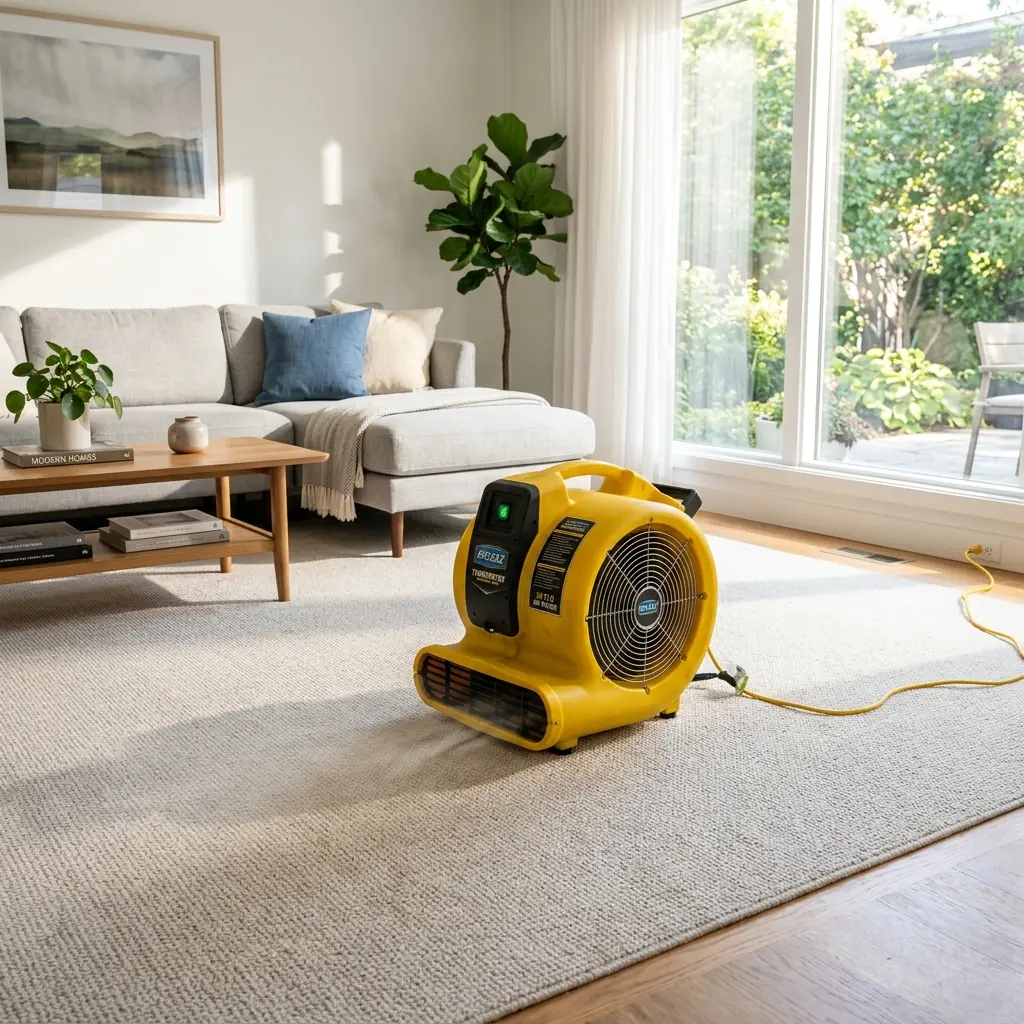
- Move air across the carpet, not just around the room. A pedestal fan angled low at the floor does more than a ceiling fan on its own.
- Run the air conditioning on dry or dehumidify mode rather than cooling, with internal doors open so the whole floor benefits.
- Ventilate in the afternoon, roughly between 2pm and 5pm, when outdoor humidity is usually at its lowest.
- Keep furniture off the carpet until it is properly dry, and leave protective tabs or foil under legs if it must go back early.
- Use a dehumidifier in a closed room if you have one. In a single bedroom it will out-perform every other option.
How to Tell Whether It Is Still Wet
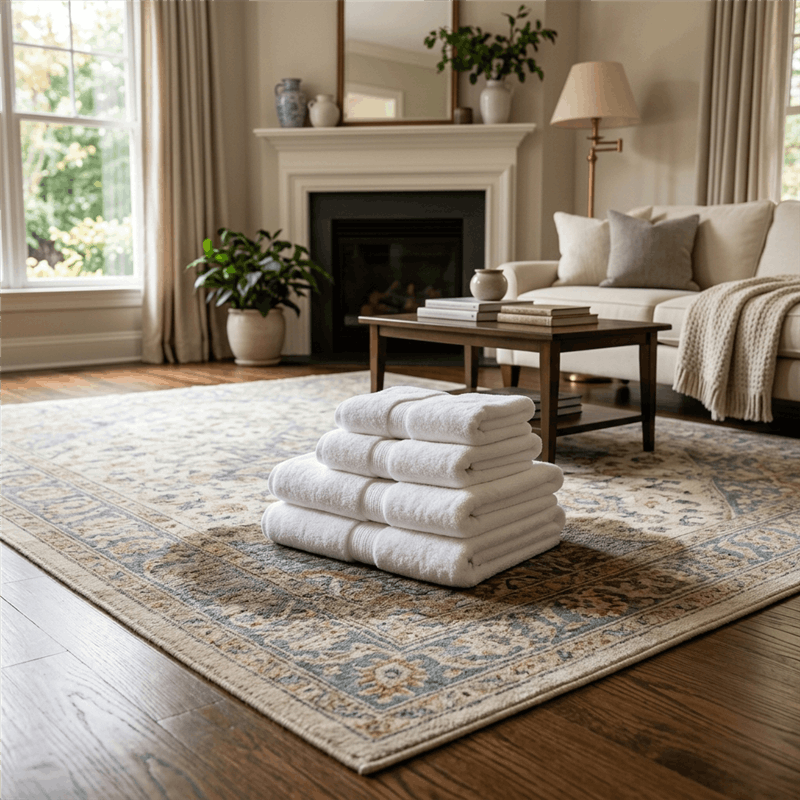
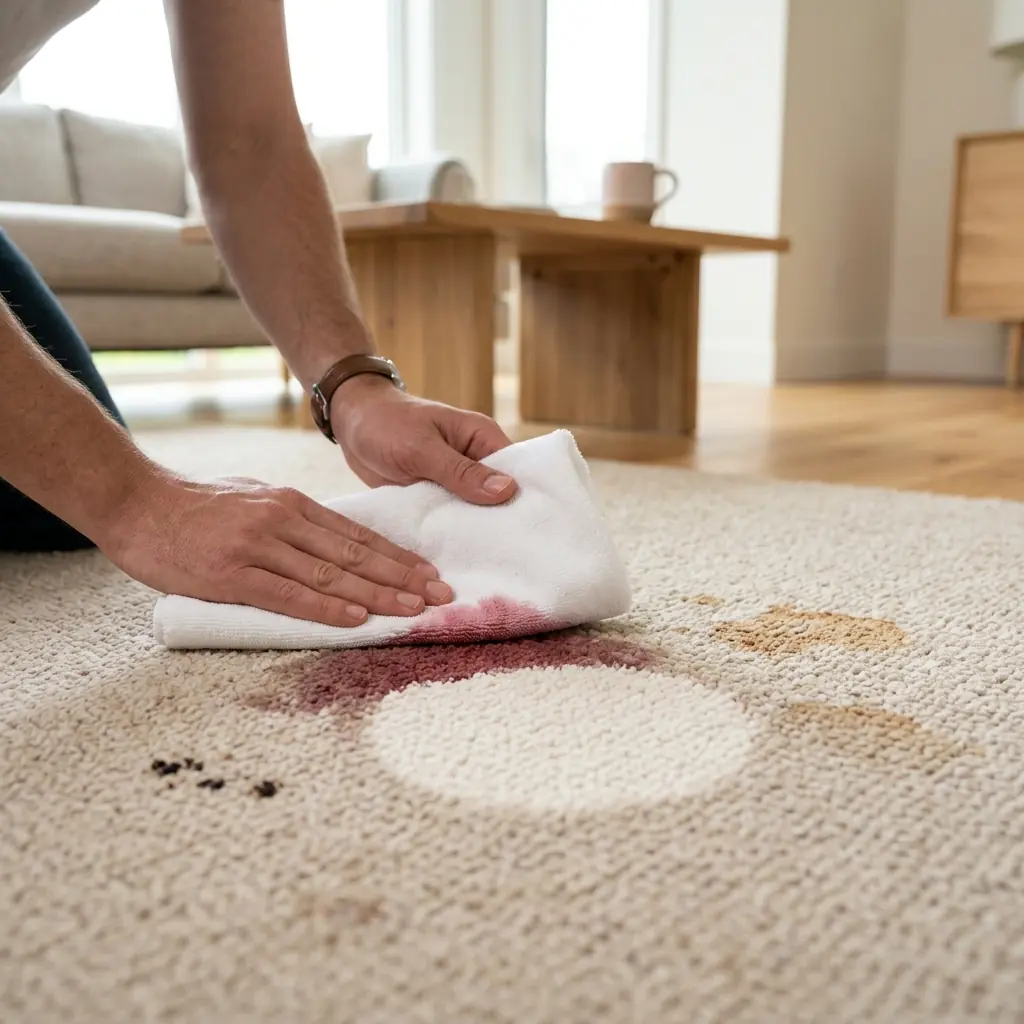
Press the back of your hand into the pile for a few seconds. Dry carpet feels neutral or slightly warm. Damp carpet feels cool, and a folded white towel pressed down hard with your foot will pick up visible moisture. Do this in the middle of the room and again near the skirting boards, because edges dry last.
Our guide on how long carpet takes to dry covers realistic timeframes for different methods and conditions.
When Humidity Is Not the Answer
If the carpet is dry and the smell has not lifted after three or four days, drying is not the problem. The likely explanations are contamination already in the underlay before the clean, usually old pet urine reactivated by the moisture, or a moisture source under the floor.
A sharp ammonia edge points at the first. A smell worse near external walls, or present before cleaning, points at the second. Our article on why carpet stains come back explains the wicking that usually accompanies it, and removing pet urine smell for good covers a deeper treatment.
Preventing It Next Time
Book a morning rather than a late afternoon so the carpet has daylight hours to dry, and choose a run of dry days rather than the week after heavy rain. Ask whether air movers are available, and clear the room properly so nothing blocks airflow across the floor.
If your carpet is still musty several days after a clean, contact Fresho Carpet Cleaning Brisbane and tell us when the smell started and where it is strongest. That usually tells us whether you have a drying issue or something underneath that needs a deeper treatment.